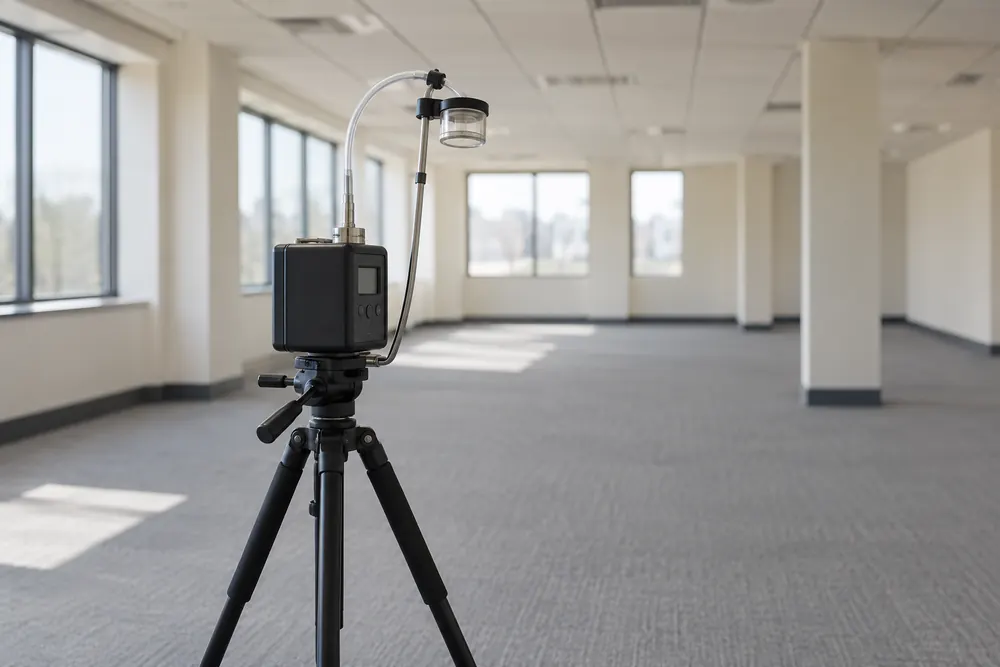
What Air Monitoring Measures
Asbestos air monitoring samples airborne fibres under defined conditions and uses laboratory analysis to report a fibre concentration. It can form part of planned removal work, reassurance checks or an investigation following suspected disturbance. The sampling purpose and circumstances need to be recorded for the result to be meaningful.
An air result is a measurement for a location and period, rather than a statement about every surface or material in a building. The analyst should explain the method and its limitations. Air testing cannot replace an asbestos survey or identify whether an untested board contains asbestos.
Choose The Correct Type Of Test
Background monitoring can establish conditions before work, while leak monitoring can assess the performance of controls during suitable asbestos activities. Reassurance sampling may be considered after an incident or particular work. Personal monitoring serves a different purpose by supporting assessment of worker exposure.
Clearance assessment after applicable licensed removal is more than a single air test. It follows a defined process with inspection and analytical stages before certification. Tell us why monitoring is being requested, rather than asking only for a sample, so the correct activity and competent provider can be identified.
Analytical Standards And Independence
HSE’s analytical guidance in HSG248 describes sampling, analysis and clearance procedures. The Control of Asbestos Regulations 2012 set requirements for air testing and site clearance certification. The organisation’s UKAS accreditation needs to cover the activity being commissioned.
For removal projects, the client should appoint the analyst directly wherever possible to support impartial assessment. Confirm the scope, reporting route and authority to require further cleaning before work begins. A removal contractor’s general assurance is different from the evidence provided through the required analytical process.
How Monitoring Is Arranged
First, provide the reason for testing, the relevant survey or removal plan and details of the premises. Explain whether the area is occupied, isolated, affected by damage or awaiting release to other trades. Existing incident information should be shared without re-entering or disturbing a suspect area to collect it.
The analyst defines the sampling strategy, locations and relevant conditions. The quotation should identify which monitoring or clearance activity is included and what might require an additional visit. Access, power supply, site liaison and the relationship with the removal contractor should be agreed.
Monitoring and any required inspections then take place under the specified conditions. The report records the findings and the basis for interpretation. Where the area does not meet the required standard, further action must be completed before release rather than treating the booked attendance as an automatic pass.
Four-Stage Clearance And Reoccupation
For the applicable removal work, four-stage clearance includes a preliminary assessment, a thorough visual inspection, clearance air monitoring and a final assessment after the enclosure has been dismantled. Each stage has its own purpose. Air sampling alone cannot replace the visual inspection or confirm that an inadequately cleaned enclosure is ready for handover.
The certificate of reoccupation records successful completion of the required process. Ask who will receive it and how it connects to the work area and removal scope. Our asbestos removal page explains the other records a commercial buyer should retain.
Cost And Practical Arrangements
The type of monitoring, number of sampling locations, site conditions and required duration influence cost. Clearance attendance also depends on the readiness of the work area and the outcome of the inspection. A failed inspection, extra cleaning or a changed removal programme can require further attendance.
Ask whether travel, analytical work, reporting and repeat visits are included in the quotation. Agree the handover sequence before booking follow-on construction trades. The analyst should be able to report to the client without commercial pressure to release an area simply because the programme is tight.
If you are investigating a suspected disturbance, restrict access and obtain competent advice before deciding what evidence is needed. An immediate air test may be only one part of that response. The condition of surfaces, the nature of the material and the circumstances of disturbance also matter when deciding the next action.
Your Questions Answered
Is An Air Test The Same As An Asbestos Survey?
An asbestos air test measures airborne fibres under the sampling conditions, while an asbestos survey investigates materials within an agreed building scope. Neither replaces the other. A clear air result does not establish that concealed materials are asbestos-free, so planned construction work still needs appropriate information about the fabric it will disturb.
Can An Air Test Release A Removal Area On Its Own?
An asbestos air test cannot release an area on its own where four-stage clearance is required. The analytical process includes inspection and other checks as well as air monitoring. Confirm the required clearance scope with a competent accredited analyst and wait for the appropriate certificate before authorising reoccupation or follow-on work.